Reflexive Haiku
Syllable has too many
To even begin
13.9.09

12.9.09
Looking for a Decent Camera
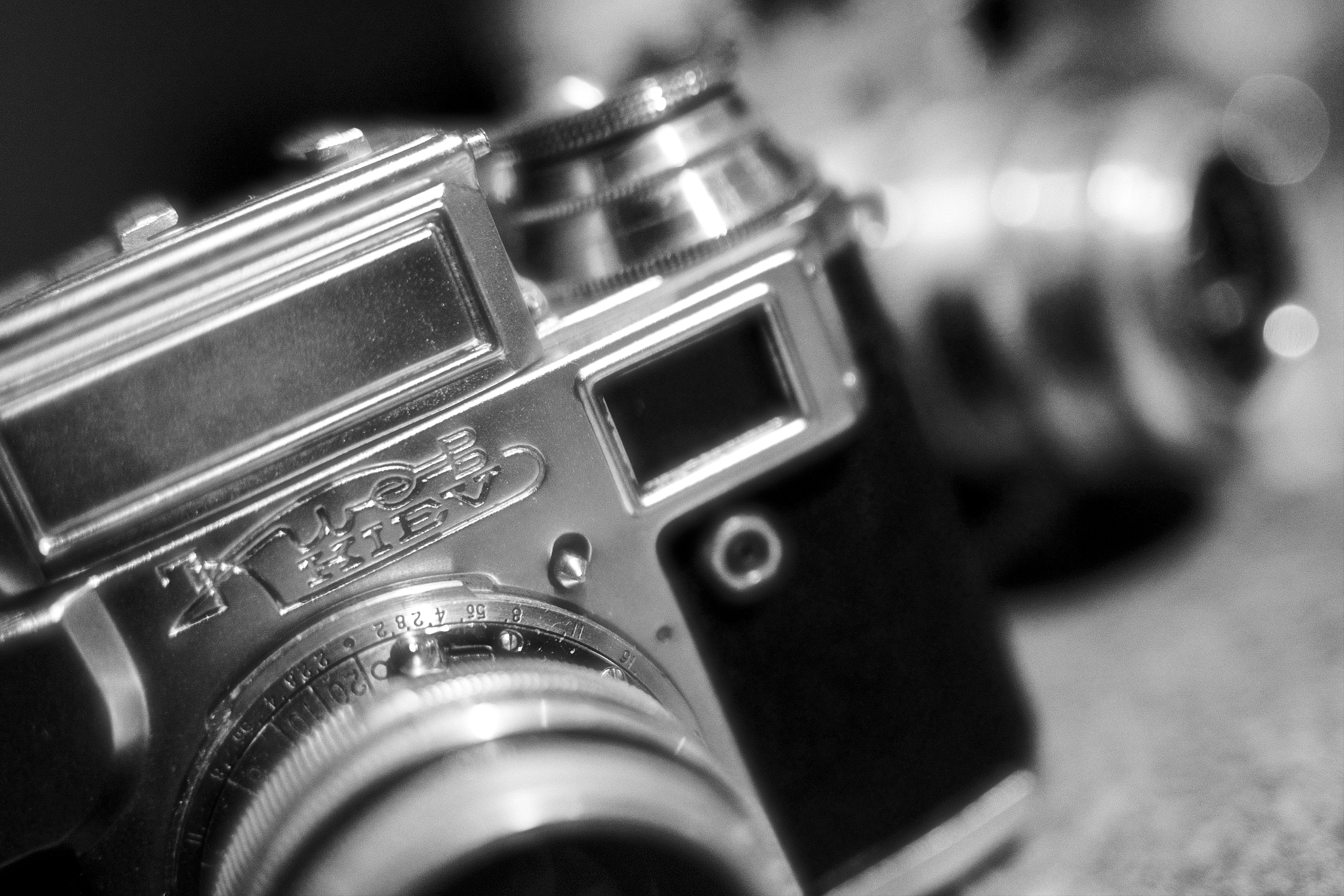
I'll have to travel through time for this one. The camera I want is almost in my budget, I just have to wait until about 2014 when others have blown its features out of the water. Unfortunately, I don't have any non-traditional method for time travel, so I'll just have to wait it out at the standard rate of one year per year.
I know what I want. I want the full set of SLR features, including interchangeable lenses, and I want 1080p video. A great added bonus would be over-cranking at lower resolution, but that'd be just for thrills. The problem is, any camera that supports it seems like it's priced at about twice what I'm willing to pay for the thing. I've no specific budget, I'm just looking for value. I'm also quite sure that this will keep me happy for a while, even when newer, better things come out. Sometimes I just want the latest, but in this case I think I really know what I need.
I suppose I have 2 options: suck it up and shell out for a new camera now, or wait for some time to tick on by for what I want to drop in price a little. There are some alternatives (buy something reasonable now with the plan to sell and upgrade) but those aren't really appealing to me in this case.
I'd take suggestions here. I really just want a good quality camera that will last me a long time, and I want it at a value price. Are my expectations too high? I guess there's nothing to do but wait and see...
11.9.09
2001 Websites

As you probably know, I'm into electronics. I'm fascinated by every new thing, from the ingeniously simple to the awesomely complex. There's a lot out there, it's a good time to be alive.
I was searching for some information on a hobby of mine though, and I was incredibly disappointed at the results I found. I did a search for BEAM robotics, and it seems there hasn't been any progress made, not a single noteworthy thing, since 2003. Google's top search results don't include anything recent, apparently the most relevant links are nearly a decade old.
It's not like I'm searching for Hammer Pants here, this is robotics! I think it's reasonable to expect some recent news, developments, and articles. But apparently that's too much to ask. It's clear that BEAM was very popular from the late 90s-the early 2000s, but then it must have fallen off the face of the earth, because no one on the internet seems to be talking about the subject.
I'm going to do my part. I've got a little blog going dedicated to the art of BEAM robotics. It's a fascinating realm, full of hard hacks, clever design, optimization, and (generally) analog electronics. Beam bots meet the expansion of their acronym, including bionics, electronics, aesthetics, and mechanics. I created the beambots blog (name subject to change) to cover what's new in the field, even if I'm the only one doing any beam work and posting it to the internet.
I'll keep you updated if I find any post '01 BEAM resources. I'd love to find some myself. I hope everybody hasn't just moved on without me, and if you have... where are you? I want to know!
Whatever the case may be, I hope BEAM can hold on, if not online then off. It truly is an art practiced by masters.
4.8.09
JukeFly

Regarding music, there are a couple of complaints I was going to make... but I've found an answer. Complaint 1: Why can't most music players show me the lyrics of the song that's playing? Complaint 2: Why can I watch any music video for free, when I can face serious penalties for sharing just the audio?
Somebody's put together a great web app that's basically a mashup of all the music features I was looking for. It even covers some of my real pet peeves like equalizing the volume of YouTube videos. The interface is a little ugly, but the features are great. It's unlike any music player I've ever used, and as far as I can tell is completely legal.
Anyway, it's called JukeFly, I've only been using it for a little while now, I'll reserve the right to edit this post for good or ill as I get more familiar with the service. It's worth checking out though.
2.8.09
On Audiophiles

An interesting survey out, that the young crowds seem to prefer MP3 sounds over uncompressed audio. Seem bizarre? it shouldn't; audiophiles have been touting their formats of choice for decades now.
Ever hear someone swear that records sound better than CDs? The preference seems to be for familiarity rather than quality. Those that grew up listening to LPs seem to think they sound better, and why not... they sound true to how they've always heard the song. The same thing is now happening with digitally compressed audio, if that's the only version you've heard, of course it sounds most like the original.
I think it's fair to take this out one step further... can a recording ever sound better than the live performance? The truth is no matter what the medium, there's always a filter between the instruments and the listeners ears. Sometimes its a record needle or digital compression, but in other cases it's a set of low-quality speakers. Even consider a live performance, the sound would presumably be great right? But what if you were in a room where you could control the atmosphere... would denser air give you a more true sound?
It's all really a matter of preference. As for me, I'll stick to lossless audio (where possible) over $10 headphones. Sounds pretty good to me!
Where did Analog Go?

Where are all the analog electronics? I mean, digital is great and all, but it somehow became synonymous with better. The way I see it, it's just two paths, and we focused on one. Who knows what secrets analog electronics may hold for us.
I've nothing against digital, I just think it's worth taking a step back and evaluating if analog can get us anywhere. There's starting to be some focus on this in artificial neural networks, but if my impression is correct, we're still talking way less than 50% compared to digital.
BEAM robotics make use of the analog properties of electronic devices, as do some other hobby projects. As a note, here's a project where some professional research went in to exploring the analog properties of an FPLD. Seems to show promise in using analog devices for evolutionary programming methods.
Let me know if you think I'm wrong, but analog electronics have just as much potential for shaking the future as digital electronics have in the last 50 years. We'll see where the future leads us.
Space Race

Exactly 12 men have walked on the moon, and only slightly more than that have ever been as far as her orbit. Unmanned spacecraft have carried out a great deal of science, at lower cost and lower risk than manned missions, but at what cost?
I'm so disheartened every time I hear someone suggest we cut NASA's budget, or nievely question the need for exploration. We need to explore that great frontier because we need to dream, to grow, and to learn. Humankind wasn't meant to stay idle for long. It's not in our nature to be contained. We're masters of our environment, and it's time to go farther.
What we need to do is increase public funding and private investment in the space program. Here are the areas to be advanced if humanity is to move forward:
1. Long distance space exploration. We should keep exploring with ground based telescopes, low earth orbit projects like the highly successful Hubble, and eventually include lunar telescopes which could have the advantage of being very large and not having atmospheric interference. These should be looking for signs of life, hospitable places, and other stellar points of interest.
2. Manned exploration. We should be going everywhere: back to the moon, mars, asteroids, everywhere that we can reasonably go. And we should do it in the name of innovation. There's a fundamental difference between sending a probe and sending an astronaut. A person can see a new landscape and develop new ideas. For a human, answering a question is not just a check off box on the mission log, it's the gateway to a hundred new questions waiting to be explored. If we want science to advance quickly, we need to get people out there and exploring.
3. Robotic Exploration. Don't think I'm crazy, I don't want to cut this out; it is cheaper and safer than manned flight, it just shouldn't be a substitute when it's such a good auxiliary. Unmanned craft are perfect for initial missions to new places, to pave the way for manned missions. They can go before and establish habitable landing sites in distant places.
Unmanned craft also have a place in mining resources from asteroids and other planets, resources we will need as space collonies grow. They also have a great ability on self destructive missions, such as flying into the sun, or crating an investigatable impact on another planet.
4. Space Collonies. These are critical to our long term space plan for a few reasons. First, it's how we will create a new paradigm where people are born, live, and die in space. It's our chance to create new cultures and reap the benefits that come from that.
Space collonies will also be critical to manned exploration of distant stars. Some question the morality of a multiple-generational space ship, but once the prescedent is established that some people live out their entire natural lives in space, this moral dillema will fade. And if the collony is materially self-sufficient, information is all they need to stay as connected to the remainder of humanity as they would have in low Earth orbit.
Space collonies have the advantage of being potentially profitable in the near term as space tourism begins in earnest. The cash waiting to be invested and spent in ths industry will be a great driver for space exploration of all types.
The final great benefit of space collnies is the strength they impart to our species. Currently it seems we may be the greatest I telligence that exists in the universe; it'd be a shame to lose it all in a single cataclismic event. A single manned space colony sitting at perhaps L5, the Lagrange point on the far side of the moon, would be a great insurance pollicy until we establish bases around the solar system.
5. Investing in Space Education. We should be encouraging and funding education in science, engineering, and like fields. The more kids we have interested in these areas, the faster progress will go as they enter the workforce. We'll also see growth in what we're willing to invest into science and exploration as we shift to a more science minded society. It's coming, but we'll improve the lives of generations if we invest in education and make it come that much sooner.
None of this is impossible, we'll be getting Christmas cards from Alpha Centuri soon enough- but it's going to take an investment on our part. The good news is, we'll see the returns.
Subscribe to:
Posts (Atom)